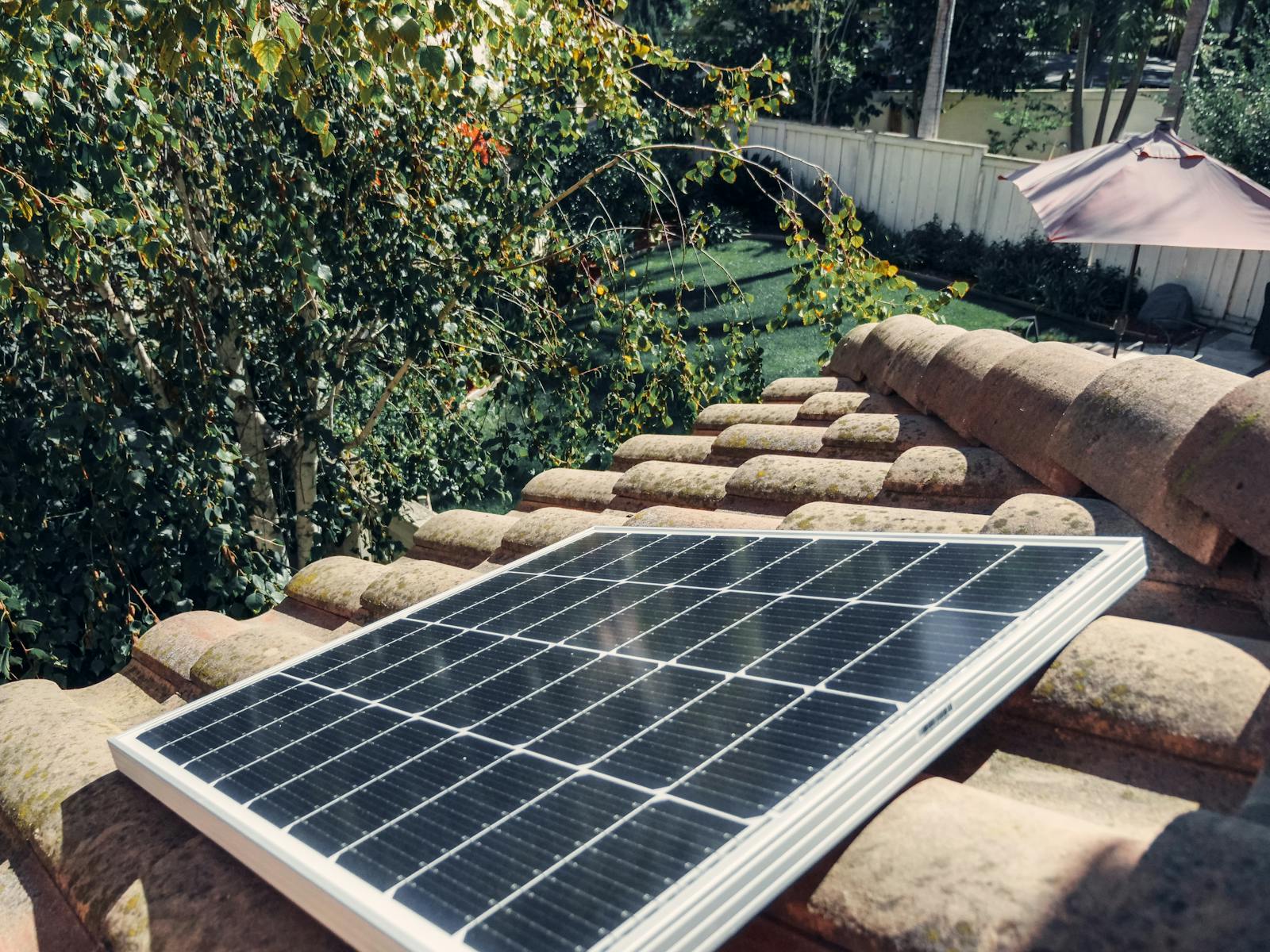
Imagine living completely off the grid, your home powered by the sun’s rays, where each sunrise fuels not only your day but the very life of your household. This isn't a fantasy or a distant dream; it's the reality we embraced when we transitioned to running our entire homestead on solar with backups.
It's a journey that transformed our lifestyle and gave us a sense of independence and security we never knew was possible. Gone are the days of worrying about rising electricity costs and power outages. Instead, we've discovered a sustainable way to thrive, while making a positive impact on the environment.
In this blog post, we're excited to share how we tackled the challenges of adopting solar power, from initial setup to creating a reliable backup system. You’ll get an insider's view into the practical steps we took, the lessons learned, and the unexpected benefits of moving away from conventional energy sources.
Whether you're considering a similar path or just curious about how we run our entire homestead on solar with backups, join us as we delve into the nuts and bolts of our experience, shedding light on both the triumphs and trials of our solar-powered existence.
Choosing Solar Power for Our Homestead
When we first explored the idea of energy independence, we quickly realized that solar power offered the perfect combination of sustainability, cost savings, and resilience.
We live miles from the nearest grid substation, so traditional utility connections would have been prohibitively expensive—and vulnerable to frequent outages in extreme weather. By deciding on solar, we embraced a clean, renewable resource that aligns with our homestead’s ethos of self-reliance.
How We Run Our Entire Homestead on Solar (With Backups) didn’t happen overnight; it started with evaluating our daily energy needs and projecting future growth, from powering refrigerators and lighting to running water pumps and workshop equipment.
To justify the investment, we conducted a thorough cost-benefit analysis, comparing upfront solar installation costs to decades of electricity bills, maintenance fees, and occasional generator fuel.
The numbers spoke for themselves: after seven to eight years, our solar array would pay for itself, and every kilowatt-hour generated beyond that point is nearly free. That financial forecast, combined with the environmental benefits—such as reducing carbon emissions and preserving local air quality—sealed the deal.
Once committed, we set out to design a system robust enough for our remote location, ensuring that our decision to install solar power would serve our homestead for decades to come.
Planning and Designing the Solar System
Accurate planning is the foundation of any successful off-grid solar setup. We began by performing a detailed energy audit of appliances and tools across the homestead. This helped us calculate peak loads and daily consumption in kilowatt-hours.
Next, we factored in seasonal sunlight variations, shading patterns caused by nearby trees, and roof orientation. By running solar modeling software, we determined the optimal panel tilt angles and total panel capacity required to meet our needs year-round.
Parallel to load analysis, we navigated permitting requirements and interconnection guidelines for our county. Though we intended to remain off-grid, understanding local regulations helped us choose compliant hardware and ensured future-proofing in case we ever decide to hybridize with a micro-grid.
We worked with an experienced solar engineer to finalize rack placements, inverter selection, and wiring diagrams, confident that careful upfront design would minimize surprises during installation and maximize returns down the road.
Installing Solar Panels and Components
Installation day was both exhilarating and demanding. We had pre-assembled mounting rails at ground level, then hoisted them onto the south-facing roof section. Safety harnesses and scaffolding were critical.
We attached each solar panel to the rails, ensuring consistent spacing for optimal airflow and cleaning access. Wiring conduits ran along the rafters, neatly channeling DC cables to a weatherproof combiner box mounted near the main entry.
From the combiner box, heavy-gauge multi-strand cabling carried power to our central inverter, converting DC to AC electricity suitable for household use. We selected a high-efficiency, grid-interactive inverter capable of exporting surplus energy back to a small battery backup system.
Throughout the process, we adhered strictly to the National Electrical Code and consulted licensed electricians for the final connections at the main distribution panel. By afternoon’s end, the solar array was live, and the inverter display proudly showed incoming watts from the sun.
Integrating Backup Systems for Redundancy
Solar power alone can’t guarantee uninterrupted energy during cloudy stretches or equipment downtime, so we built a layered redundancy plan. Our first line of defense is a lithium-ion battery bank sized for two full days of household consumption.
It kicks in automatically when panel output dips. Next, we installed a propane-fueled standby generator with an automatic transfer switch, ensuring power continues seamlessly during extended low-sun periods or maintenance windows.
Integration involved synchronizing the battery inverter with the generator’s transfer switch. We programmed the system so that if battery reserves hit a predefined threshold, the generator fires up and both recharges the batteries and powers essential circuits.
This hybrid approach—solar primary, batteries secondary, generator tertiary—gives us peace of mind. Whether it’s an unexpected storm or routine system check, we know our homestead remains powered without manual intervention.
Monitoring Energy Production and Consumption
Keeping track of real-time energy metrics is crucial for off-grid stability. We installed an energy monitoring platform that connects to our inverter and battery management system.
Through a mobile app and a wall-mounted touchscreen display in the workshop, we watch key parameters like panel output, battery state of charge, voltage, and current flow.
This data lets us identify inefficiencies—say, a drop in panel output due to soiling or shading—and adjust usage patterns accordingly. If we see a string underperforming, we can plan a quick inspection rather than waiting for a complete system failure.
Historical logs also help us anticipate seasonal shifts and fine-tune our energy budget, making our homestead’s power management both proactive and transparent.
Establishing Energy Storage Solutions
Our battery bank is the heart of the backup architecture. We opted for modular lithium-iron-phosphate (LiFePO4) batteries, prized for long cycle life, safety, and depth of discharge.
Each battery module stores around 5 kWh, and we installed enough modules to cover two days of typical use without sun. The modular design allows for future expansion if our energy needs grow.
To maintain battery health, our battery management system (BMS) monitors temperature, voltage, and individual cell balance. It communicates with the inverter to regulate charge and discharge rates, preventing overcharging or deep depletion.
We also included a small ventilation panel in the battery enclosure to keep heat at bay. With this robust storage solution, our homestead remains resilient, even during multi-day storms or maintenance cycles.
Managing Maintenance and Upkeep
Routine maintenance keeps our solar setup running smoothly. Every three months, we clean the panels with soft brushes and mild detergent to remove dust, pollen, and bird droppings that can reduce efficiency.
We also inspect mounting hardware, looking for loose bolts or corrosion, and apply marine-grade lubricant to moving parts on panel trackers (for ground-mounted arrays).
Electrical components—junction boxes, conduit fittings, and inverter connections—get a thorough check once a year. We tighten any loose wiring, test ground fault indicators, and update inverter firmware to benefit from performance improvements.
By keeping detailed logs of inspections and cleaning, we spot trends before they become problems, ensuring our homestead continues to operate at peak reliability.
Maximizing Efficiency and Sustainability
Beyond hardware, our homestead’s sustainability hinges on mindful energy use. We’ve switched to LED lighting throughout the property and upgraded to Energy Star appliances.
Time-of-use scheduling helps: we shift high-draw tasks like washing and baking to midday, when solar output peaks. Smart power strips and motion sensors further cut phantom loads in seldom-used rooms.
On the production side, we’ve experimented with panel-level optimizers to mitigate partial shading from our fruit trees. Regularly pruning branches not only protects panel efficiency but also contributes to our orchard’s health.
By combining efficient habits with technology enhancements, we squeeze every kilowatt-hour possible from our array, reducing reliance on backups and maximizing returns on our solar investment.
Adapting to Seasonal Changes and Weather Conditions
Seasonal shifts require flexible strategies. In winter, lower sun angles and shorter days reduce generation, so we adjust panel tilt to a steeper angle and temporarily curtail nonessential loads. Snow accumulation is brushed off as soon as it’s safe, restoring sunlight absorption.
We’ve also installed quick-release mounts on ground panels to facilitate rapid clearing after heavy storms. Summer brings heat-induced efficiency losses; to counteract this, we ensure panels have adequate airflow by maintaining a minimum roof clearance.
When monsoon-style rains hit, we monitor inverter data closely to detect any water ingress or potential faults. By proactively adapting mounting angles, cleaning schedules, and load priorities, we keep our energy system responsive to weather’s whims.
Embracing a Sustainable Solar-Powered Lifestyle
Transitioning to solar power—and integrating backups—has transformed our homestead into a model of resilience and sustainability. We’ve reduced our carbon footprint, slashed energy expenses, and unlocked the freedom of true off-grid living.
Each sunrise now directly fuels our daily activities, from cooking and heating to powering workshops and irrigation. Our journey illustrates that with careful planning, reliable backup systems, and a commitment to efficiency, anyone can enjoy the advantages of renewable energy.
If you’ve been dreaming about how we run our entire homestead on solar with backups, let our experience inspire your own path to energy independence.




0 Comments